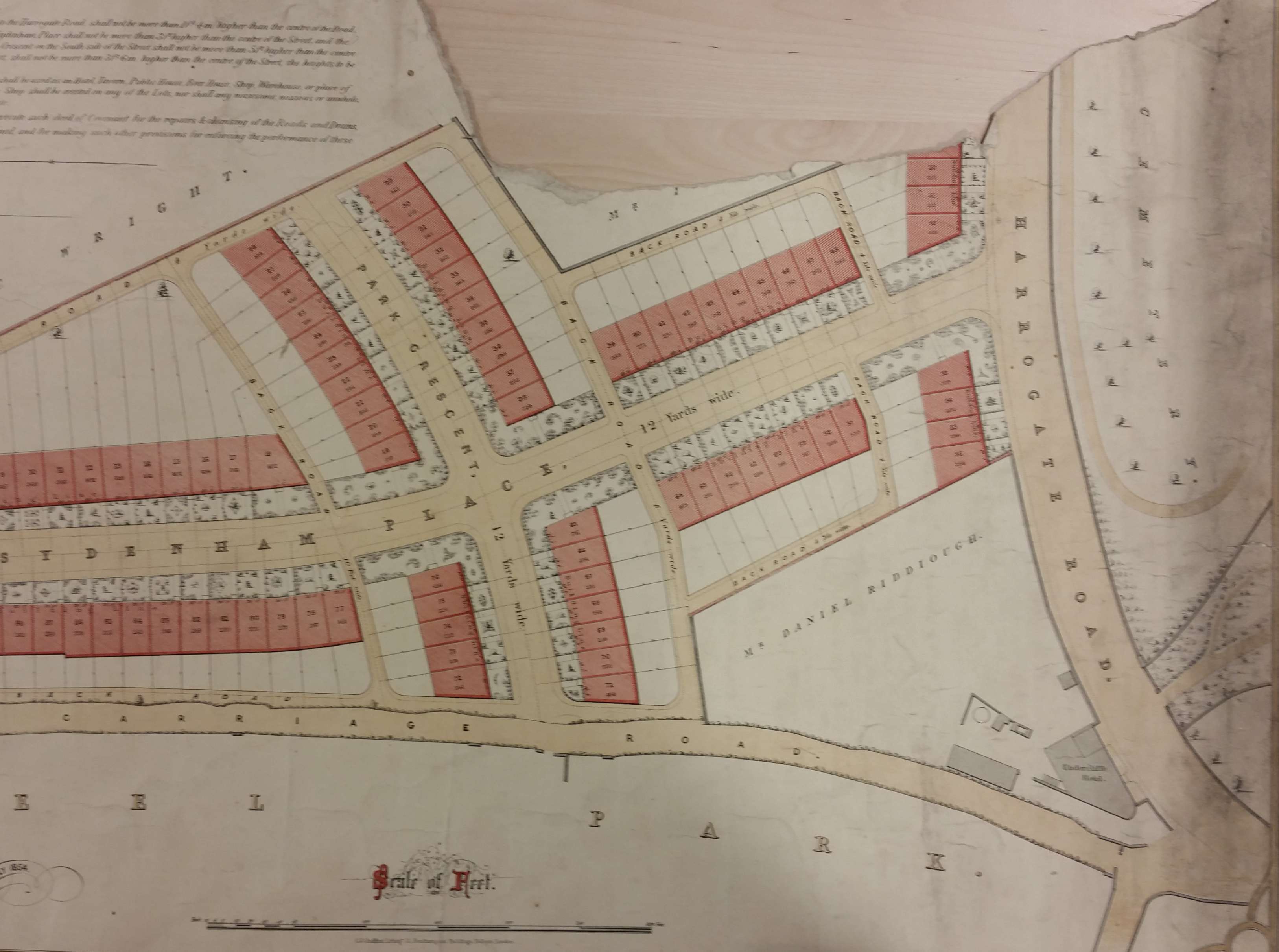
4.066 SYD 1854 SMI BHM 408 B7
Material: paper Date: 1854
Scale: 60 ft = 1 inch Size: 80*60 cm
Condition: poor (section missing)
This map from the Bradford Local Studies Library reserve collection is a development sale plan drawn by the distinguished Bradford surveyor and road engineer Joseph Smith. It is annotated ‘409 lithograph of Airedale Land Society Land nr Peel Park July 1854’. I can only find three small advertisements in the Bradford Observer (from 1855 and 1865) dealing with the Airedale Land Society, and a related Wellington Villa Society, and these don’t seem to specifically deal with this development.
The plan is very damaged, as the first image reveals, but it lists deeds of covenant imposed on potential purchasers. Where are we? Harrogate Road may be a misleading clue although a road of that name does still exist. However the 1887-88 Post Office Directory map from 30 years later reveals a somewhat different story from that told on our plan.
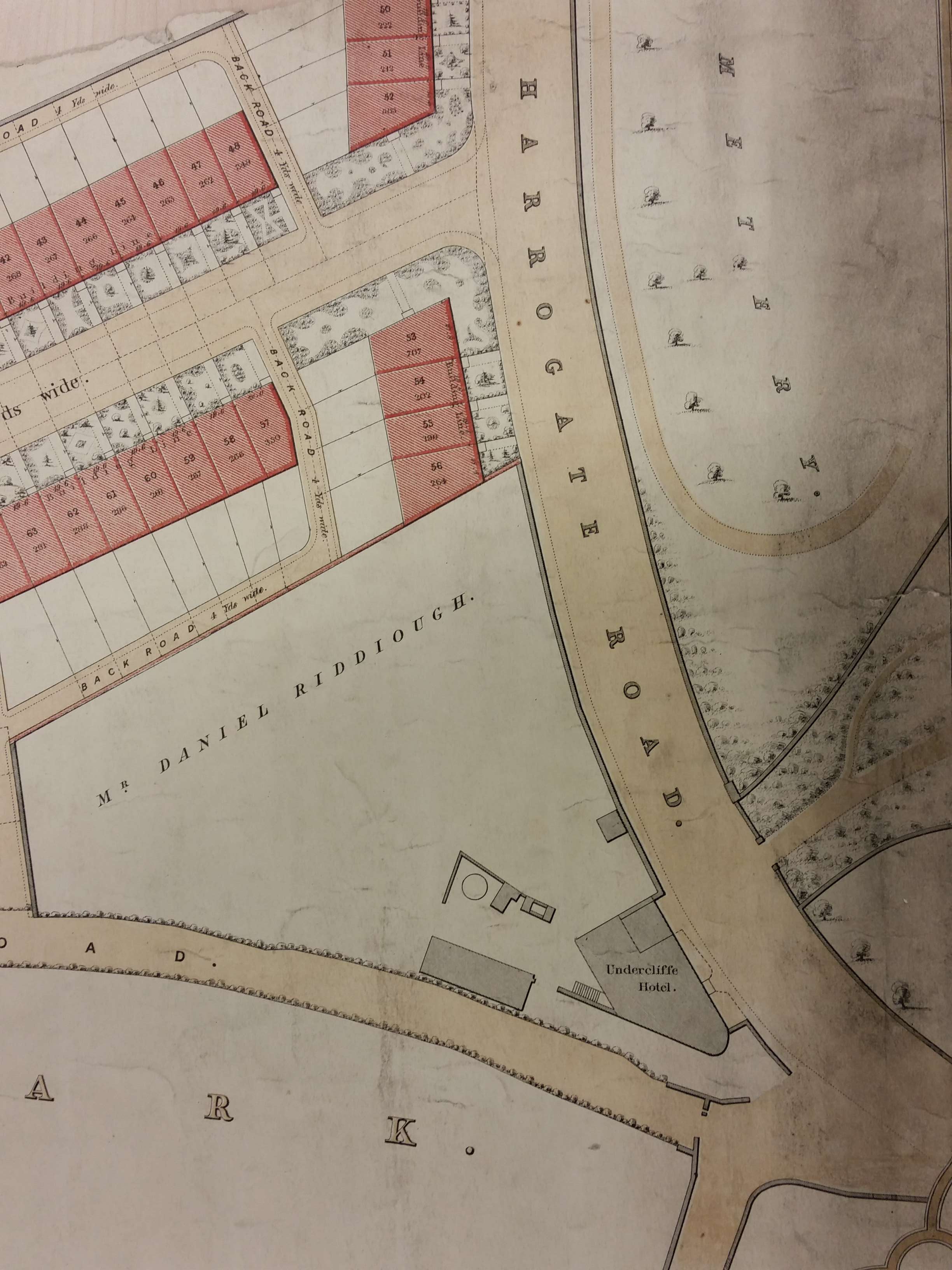
If we look at the detail, then locating the area planned depends on whether I have identified the property of Mr Daniel Riddiough, including the Undercliffe Hotel, correctly or not. One possibility is that it is ‘Riddiough Place’ which still exists.
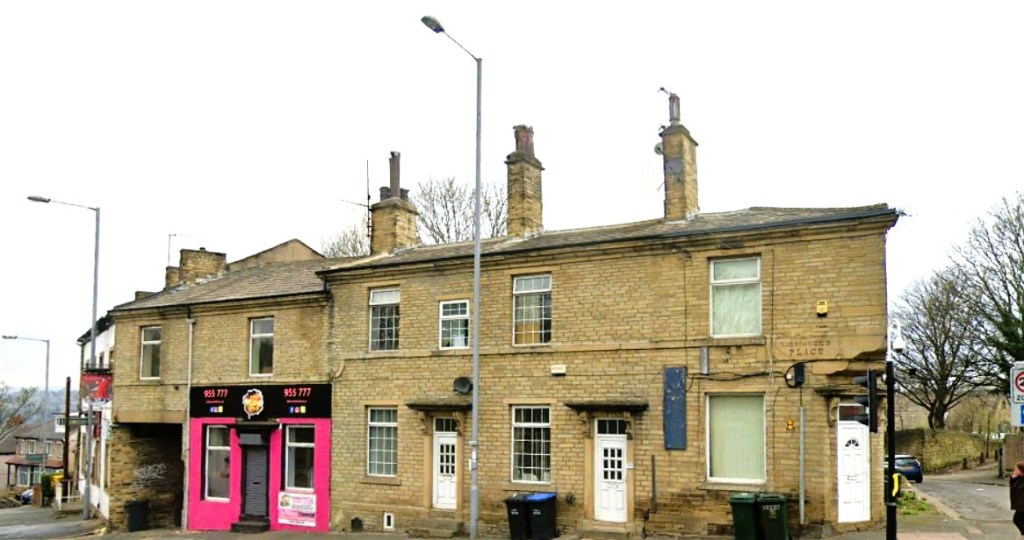
I hope you can see the name inscribed on the extreme right of the building in this Google Earth Streetview capture. This building is between the ends of Bolton Lane and Bolton Road. Opposite is a Peel Park entrance, and Lister Lane. But this interpretation doesn’t explain the presence of Peel Park south of the planned ‘Carriage Road’ so it must be discarded.
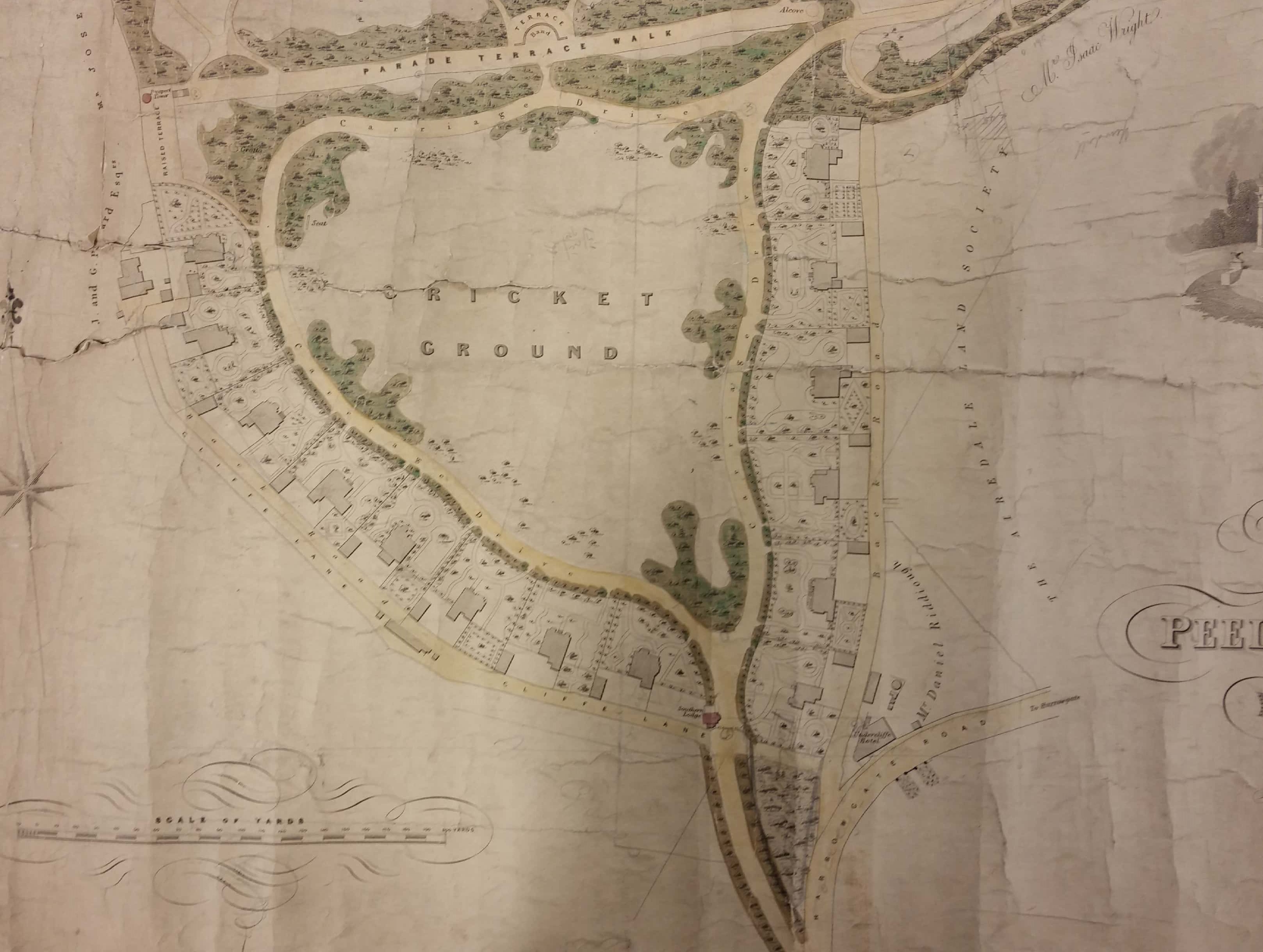
The more likely alternative is that the Underliffe Hotel represents the Peel Park brewery which Riddiough certainly owned. In this case there is no problem with Sydenham Place or the placement of Peel Park, but Harrogate Road is Otley Road, and Riddiough must have purchased the land right up to Sydenham Place to enlarge his premises. Some housing development took place but not one as extensive as that originally envisaged on the plan. This early map of Peel Park (1854), also in the LSL collection, shows the same area.
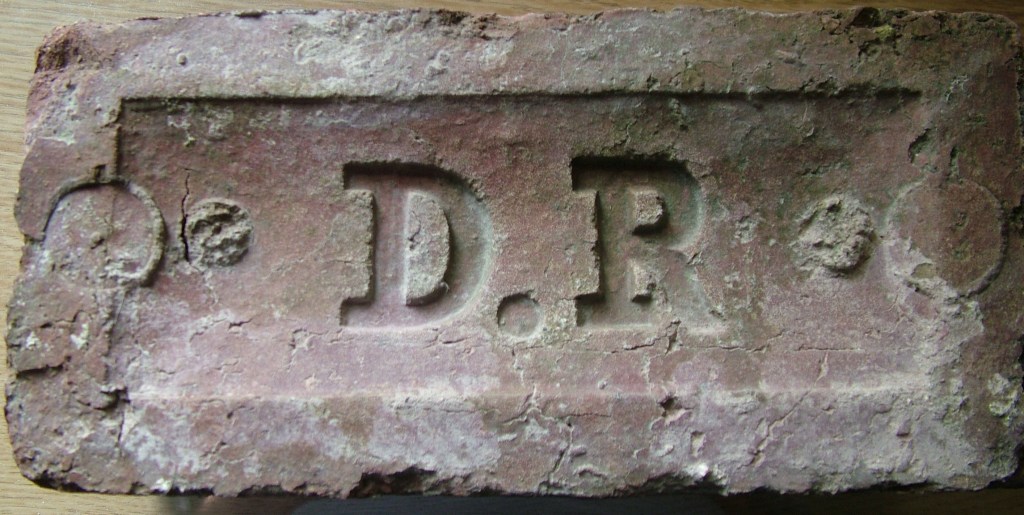
So, who was Daniel Riddiough? He was a brick-maker and quarry owner located in the Otley Rd/Killinghall Road area. The brick mark [D.R] must surely be his and I have seen those in Shipley allotments, the Peel Park area and near the Cathedral. At various times he was described as a joiner and builder, which is presumably how he became involved in the ownership of a quarry. But unless I am very much mistaken stone quarrying seems to be the least of his accomplishments.
Daniel Riddiough was born in Colne, Lancs. His name first appears (as Daniel Riddiough, Undercliffe) in the Leeds Mercury of 28 August 1852 applying for a licence at the Brewster sessions. By 1872 he is described in the same publication as a brewer of Otley Road offering beer-houses to let. This must indicate that he owned what was called the Peel Park Brewery, Otley Road built in 1853. Apparently, he sold this concern in 1872, and then bought it back after the new owners went bankrupt in 1882.
During this time he must have retained control of some properties since in 1876 one of his pubs, the Alpaca Inn, Edward Street was subject to a compulsory purchase order by the Lancashire & Yorkshire Railway. In the relating documents (WYA11D74/3/73/135-138) he is referred to as a retired brewer and it appears that in 1891 in sold out his brewery and 17 pubs to Hammonds Bradford Brewery Co Ltd, about the same time in fact that he became a brick-maker. The brick works were at Cliffe Lane, Bolton Road.
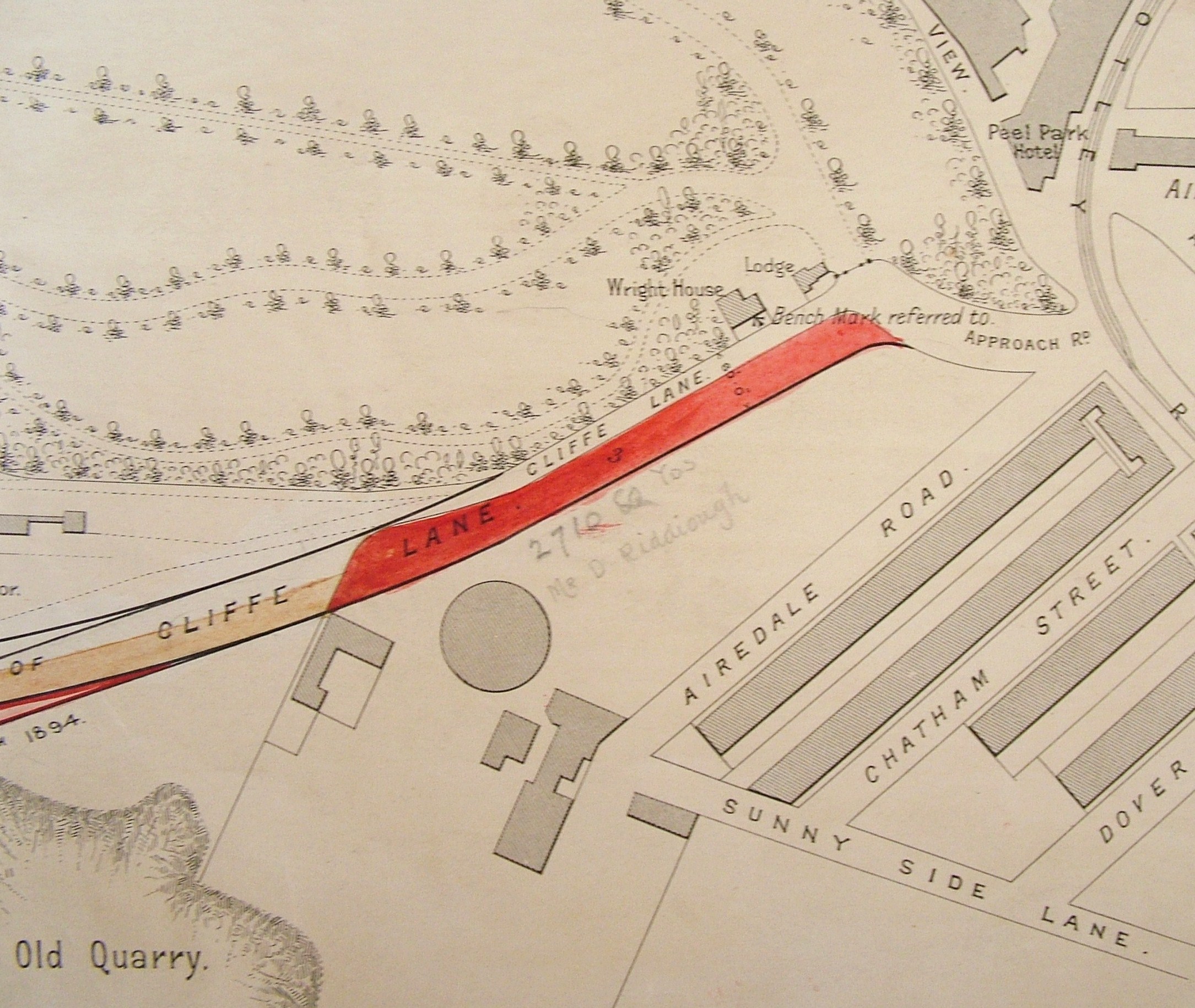
The above plan from the Bradford Industrial Museum collection shows the Riddiough brickworks (note the pencilled comment). At the top right the Undercliffe Hotel has now become the Peel Park hotel. His wife Ruth had died aged 56 in 1880 at 3, Green Cliff Villas, Otley Road; Daniel Riddiough himself died there on Dec 31 1911 at the age of 88, although in an 1898 directory his residence is given as Craig Royston, Killinghall Road.
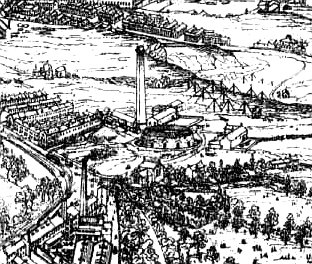
William Cudworth produced a detailed aerial drawing of Bradford to accompany one of his publications. After a good deal of study I believe that this is Daniel Riddiough’s brickworks with its circular Hoffman kiln. The bricks themselves are worth keeping an eye open for.
 Bradford and District Libraries Map Collections
another forgotten builder is samuel swaine. built holm mill and little horton lane 3 storey houses and how many others? cudworths book states that he was debarred from speaking about samuel swaine and the church at little horton built in 1806. It got knocked down and rebuilt in 1862 and sold recently in 2021. The builder and church members of the little horton chapel were the subject of a court case. called great horton chapel case (jumpers) ie happy clappy church members were taken to court. Wonder if this court case record can be found. Samuel the overseer died in 1807 and father or grandfather died 1789. both lived on little horton lane. I HAVE NOT FOUND ANY 3 STOREY BUILDINGS YET. EDMUND AND JOSEPH RILEY LIVED IN ONE PART OF THE HOUSE BUILT BY SAMUEL. Linda
LikeLike