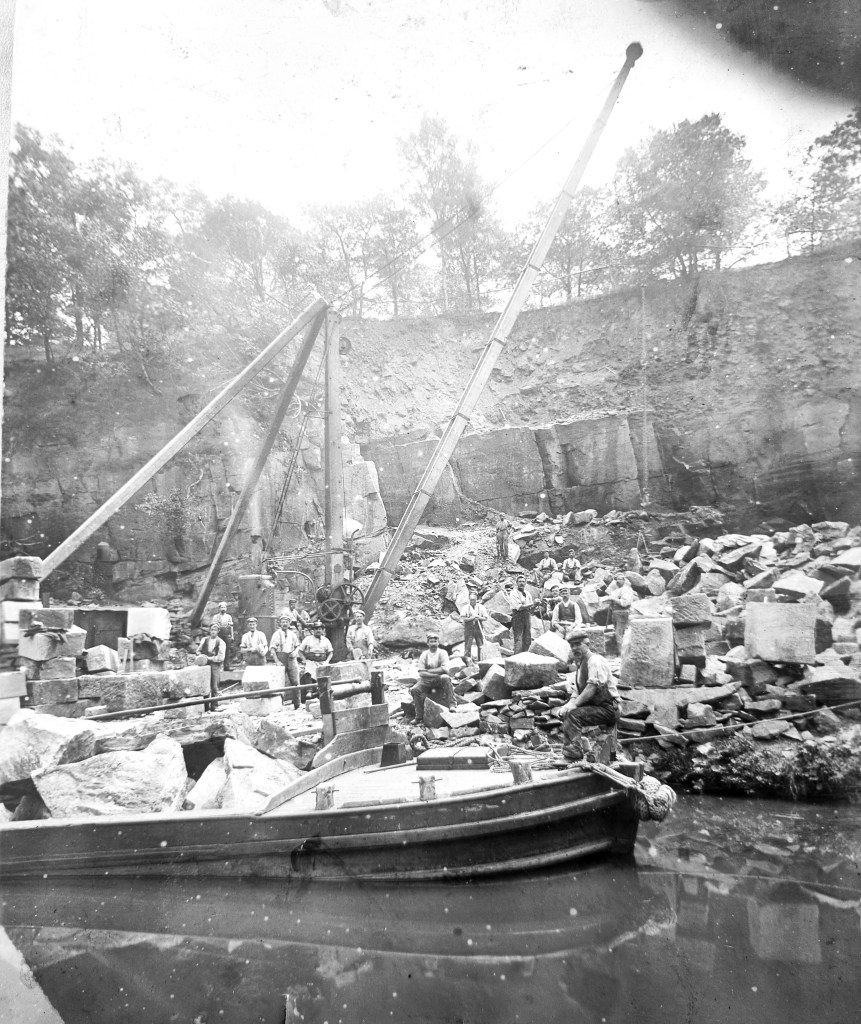
The quarrying of sandstone for building and road making was an immensely important industry in eighteenth and nineteenth century Bradford. Very few signs remain today of these quarries or ‘delphs’. Fortunately the Local Studies Library has collections of Bradford photographs, as well as maps and plans. The monochrome image is from the reserve collection. It clearly shows a working quarry with its operators: stone is being loaded onto a barge. It is undated but is from a box file where similar material originates from around 1877.
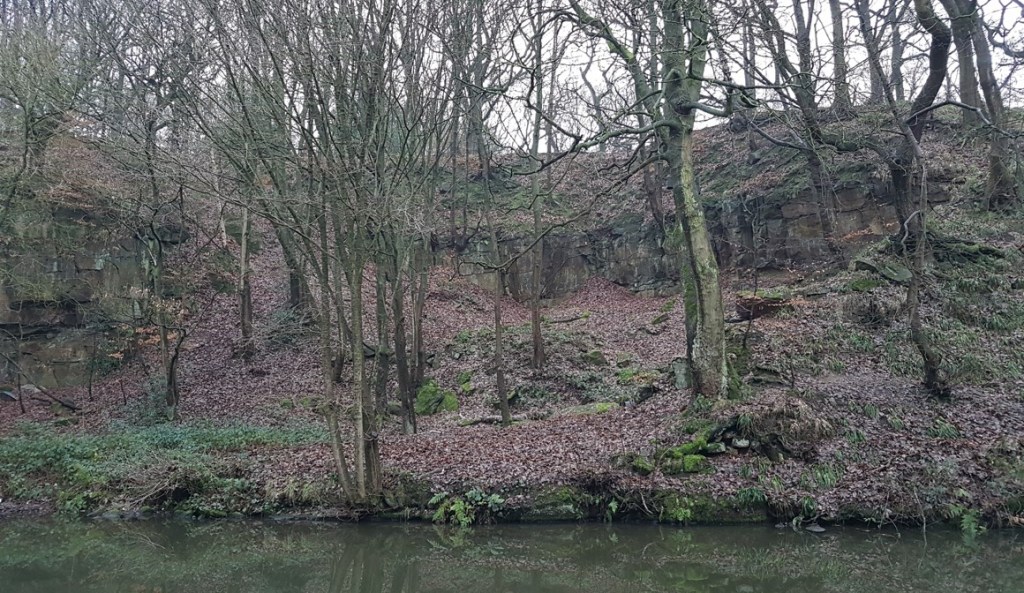
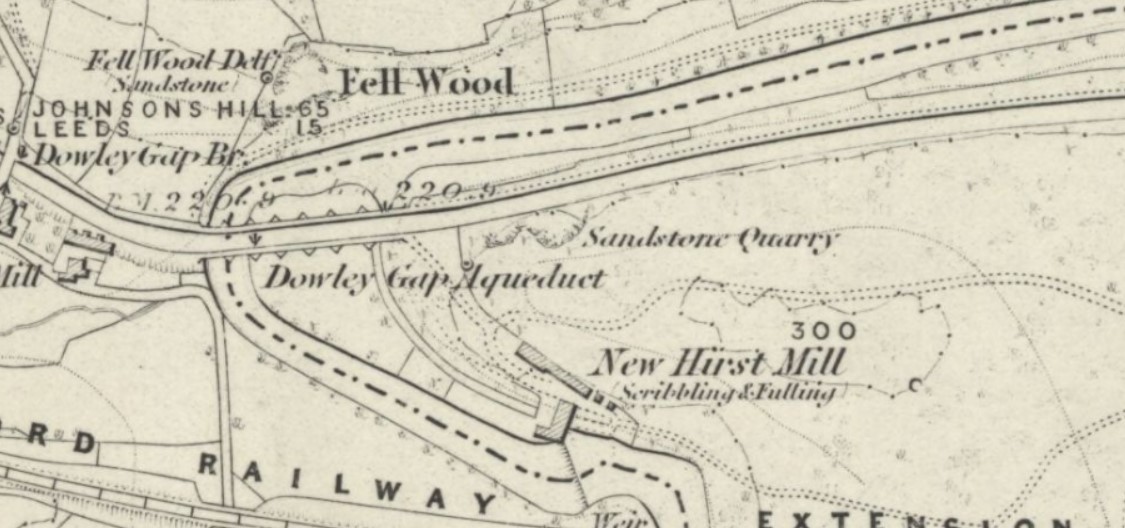
I think that I can identify the quarry as being on the canal at Hirst Wood and I’ve included a modern image. You would expect quarries to marked on an Ordnance Survey map and in fact the position of Hirst Wood Sandstone Quarry is clearly indicated on the 1850 map.
When I first saw this quarry I assumed that it was contemporary with the construction of the Leeds & Liverpool Canal, but this is quite wrong. The quarry was much later, although its position might well relate to its convenient position for water transport of the product.

The 1890 OS map above indicates that by this date the quarry is no longer working. Fortunately for historians of the extraction industries there is an additional source of information.
This quarry was one of the many in Heaton and Shipley owned by the Earls of Rosse. There is a huge archive of documents and maps relating to these parts of north Bradford at the home of the present Earl: Birr Castle in Eire. The site in question was number 25 in a list of Rosse quarries and was operated in the late nineteenth century by a man called John Metcalfe with his sons. I wonder if they feature in the picture?
 Bradford and District Libraries Map Collections
Very interesting article – one of my ancestors moved to East Morton from Suffolk in ~1845 to work as a stone mason and quarryman at the Cliff Delf (another sandstone quarry). Any idea if this quarry was one of the Rosse quarries you mention ?
LikeLike