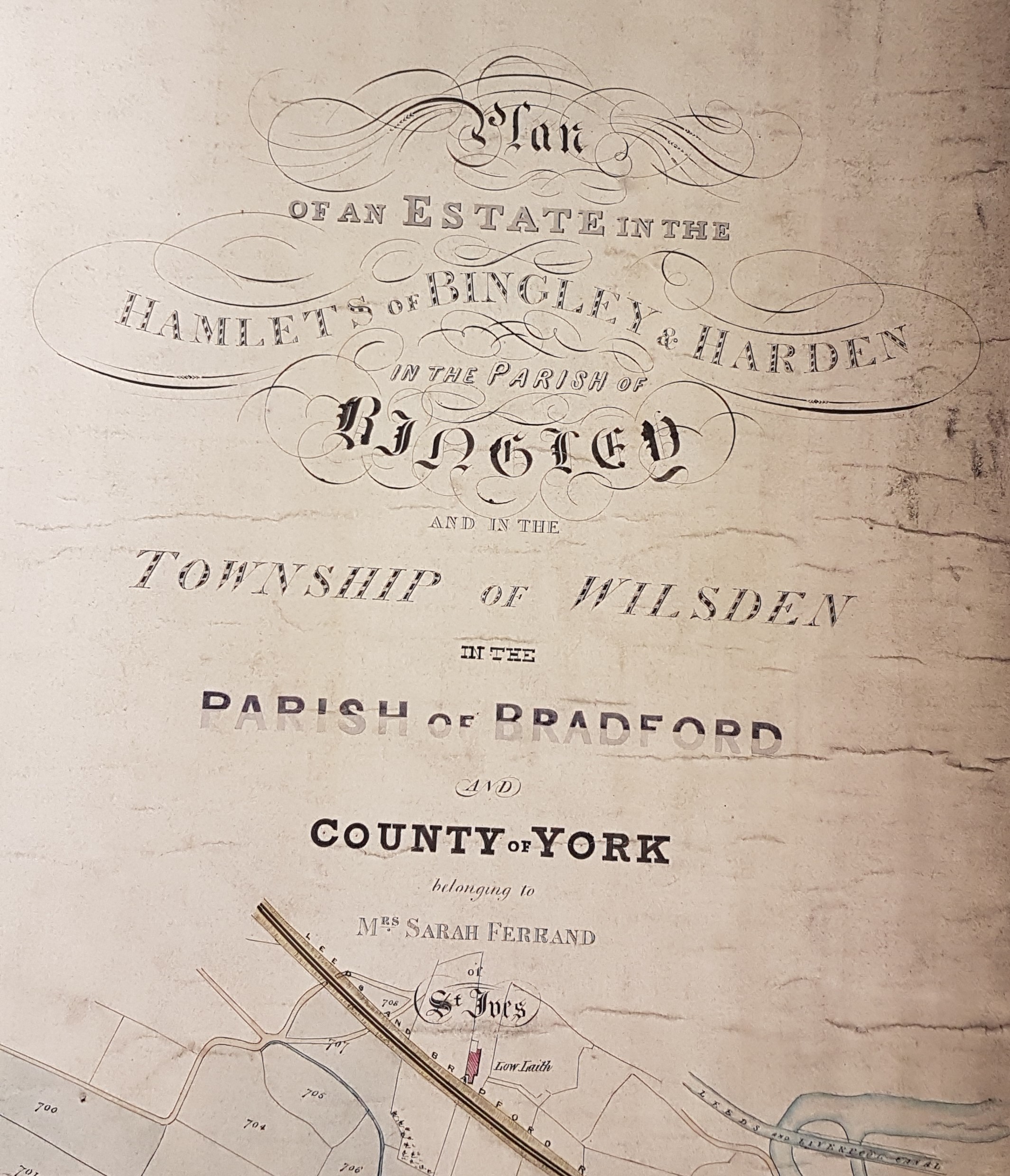
X50 H HAR c.1850 PLA
Size: 34” * 51” Material: paper
Date: unknown Scale: 6 chains to 1”
Condition: good
This is a very large map, consequently only details can be put on-line. The full title is: ‘Plan of an estate in the hamlets of Bingley & Harden, in the parish of Bingley, and the township of Wilsden parish of Bradford, belonging to Mrs Sarah Ferrand of St Ives’. Sarah Ferrand (1783-1854), and her husband Currer Fothergill Busfeild, had several children the oldest of whom was the well-known William Busfeild Ferrand MP. Sarah inherited the Ferrand estate from her brother Edward Ferrand, who died childless in 1837. By that time her husband had also died, and I imagine that her assumption of the paternal surname was part of the inheritance agreement.
Once in possession Sarah embarked on a project to enlarge Harden Grange which then, confusingly, exchanged names with St. Ives. The house was finished in the late 1830s. Her son Major William Busfeild Ferrand (1809–1889) became Conservative member of parliament for Knaresborough and was a friend of Benjamin Disraeli. He lived at Harden Grange (modern St Ives), but the St Ives Estate now belongs to the City of Bradford. This map is undated, but since Sarah Ferrand’s is described as the owner of the estate it clearly must have been drawn up in the period 1837-1854. It includes features which are definitely later than 1842-44, so I shall take the date of its composition to be c.1850.
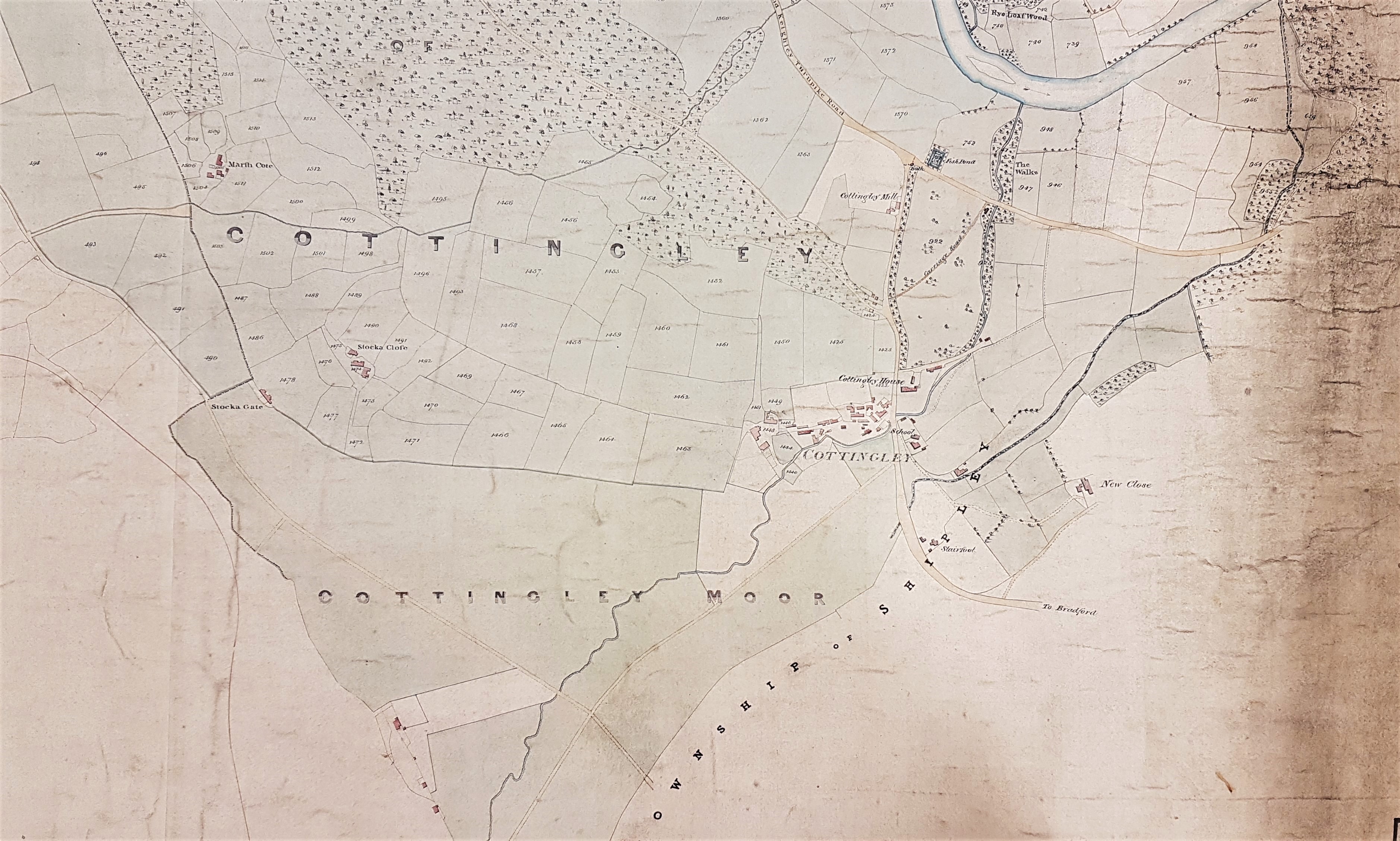
The first detail shows the road descending into Cottingley from Bradford and Shipley High Moor, to join the Keighley, Shipley & Bramley turnpike near Cottingley (Worsted) Mill. The overall arrangement of the plan closely resembles the first Ordnance Survey map of the area, which was being surveyed in the late 1840s. Note the Cottingley Beck (unnamed), later famous for its fairies.
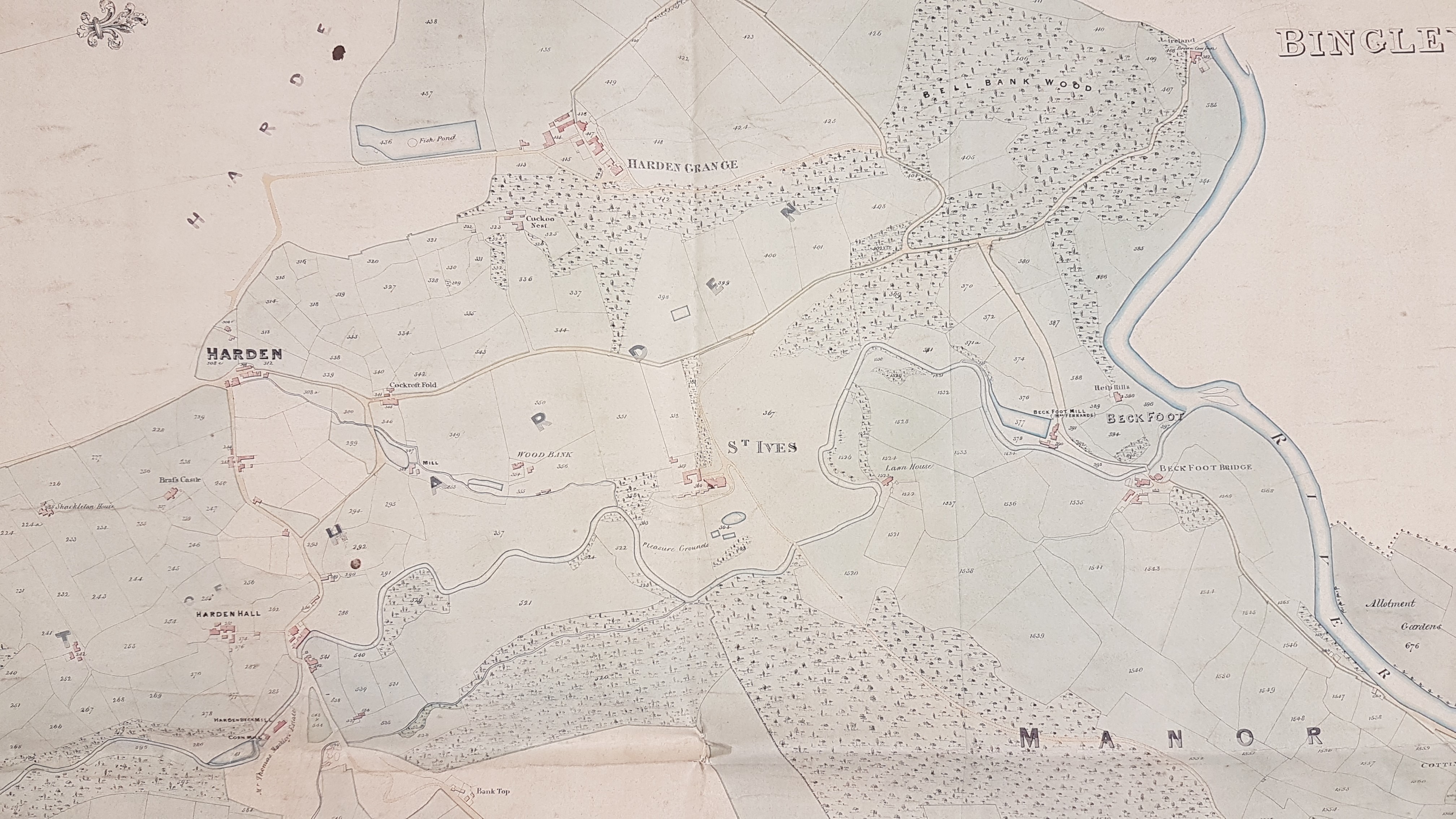
If we move onto the second section which has St Ives at its centre. The fact that the two properties have not yet exchanged names might argue in favour of an early date, but at the extreme right are the allotment gardens adjacent to Cottingley Bridge which are still in use today. These were opened by Disraeli in 1844 on land provided by Sarah Ferrand. The road (Beckfoot Lane) near them leads to the hamlet of Beckfoot. The mill belonging to Mrs Ferrand is shown, as is the Beckfoot Bridge. There is no indication that in the field immediately south of the bridge was a long-standing quarry, mining glacial erratic limestone boulders. This was Bradford’s principle source of the mineral until the opening of the Leeds-Liverpool canal brought a supply of Skipton quarried limestone to the town. In fact, the mapmaker was evidently not interested in recording the position of quarries anywhere. Elsewhere the arrangements of roads and buildings in the northern half of the map, where Bingley is linked to Harden, is essentially unchanged today.
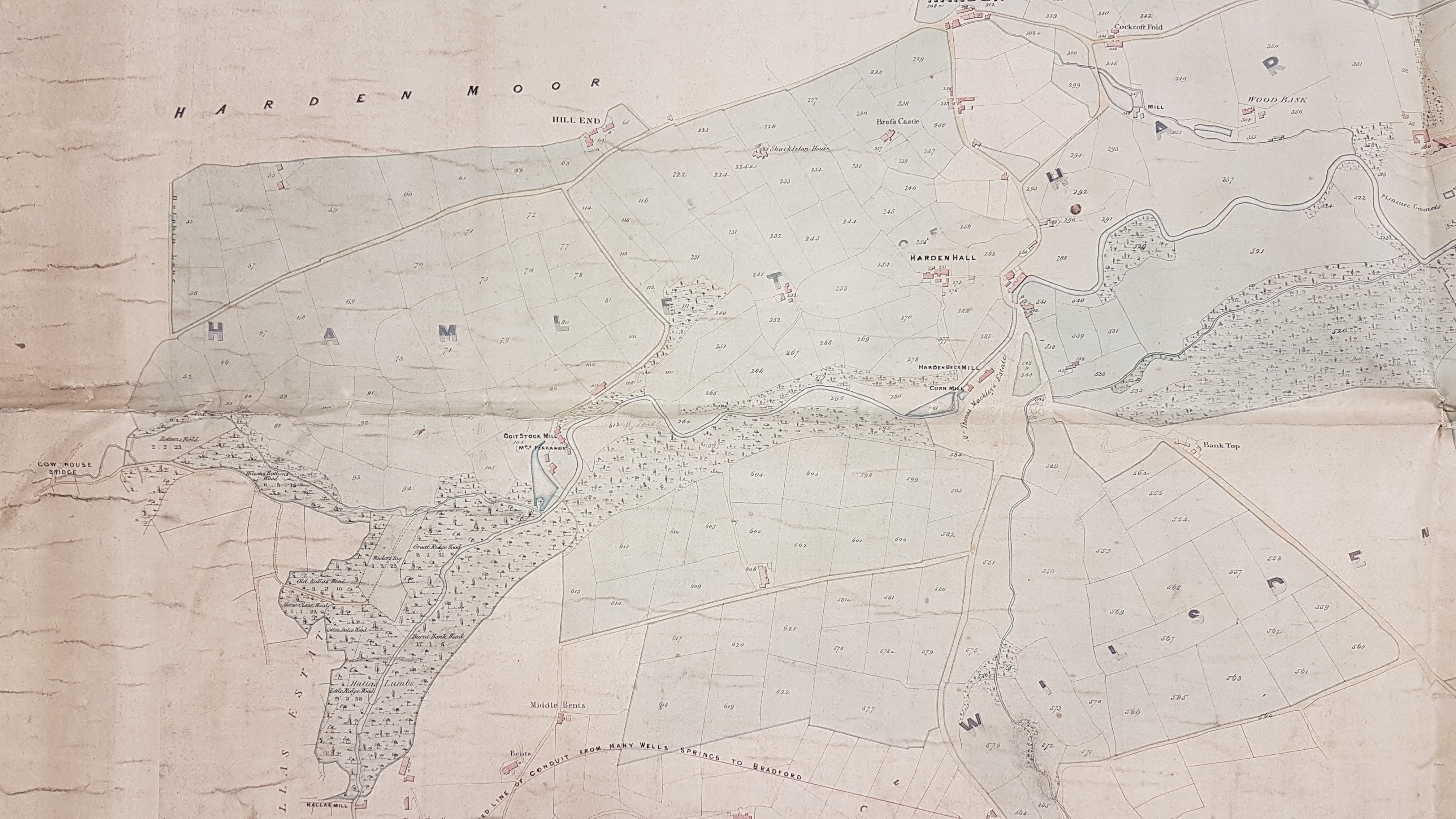
In the third detail Harden is just off the top of the plan. You can follow the road south past Harden Hall to Harden Beck worsted and corn mills (called Low Mills in the OS map). Here, even today, you can still walk along the Harden Beck to the site of Goitstock Mill. Our map records that this mill also belonged to Mrs Ferrand but the OS map notes that, at the time, it was a cotton mill. Today only the mill chimney survives, high on an adjacent hillside above a caravan park.

At the bottom of the third detail is marked ‘the intended line of conduit from Many Wells springs to Bradford’. This intended line is better shown on the very last detail included, which also identifies the position of the springs and the area of the proposed reservoir near Hewenden. The company formed to undertake these works (which included Chellow Dene and Whetley Hill reservoirs in Bradford itself) was formed in 1842. Hewenden reservoir is still present and is part of a walking trail that includes the much later Hewenden railway viaduct.
The reservoir featured in an important legal case known as Bradford Corporation v Pickles, 1895. Water percolating beneath Troopers Farm, Manywells flowed onto land by then belonging to the Bradford Corporation, and surrounding Hewenden reservoir. At that time Bradford still used this water for their city supply. Actuated by a wish to make the corporation buy his own land the owner, and brick maker, Edward Pickles obstructed the flow of water by sinking shafts into it. The court decided it was legal for him to take this action even if his desire was malicious and as a result his land had to be purchased by the Corporation.
There is a great deal of the past and future history of the Bradford area incorporated in this map.
 Bradford and District Libraries Map Collections